Smart POS
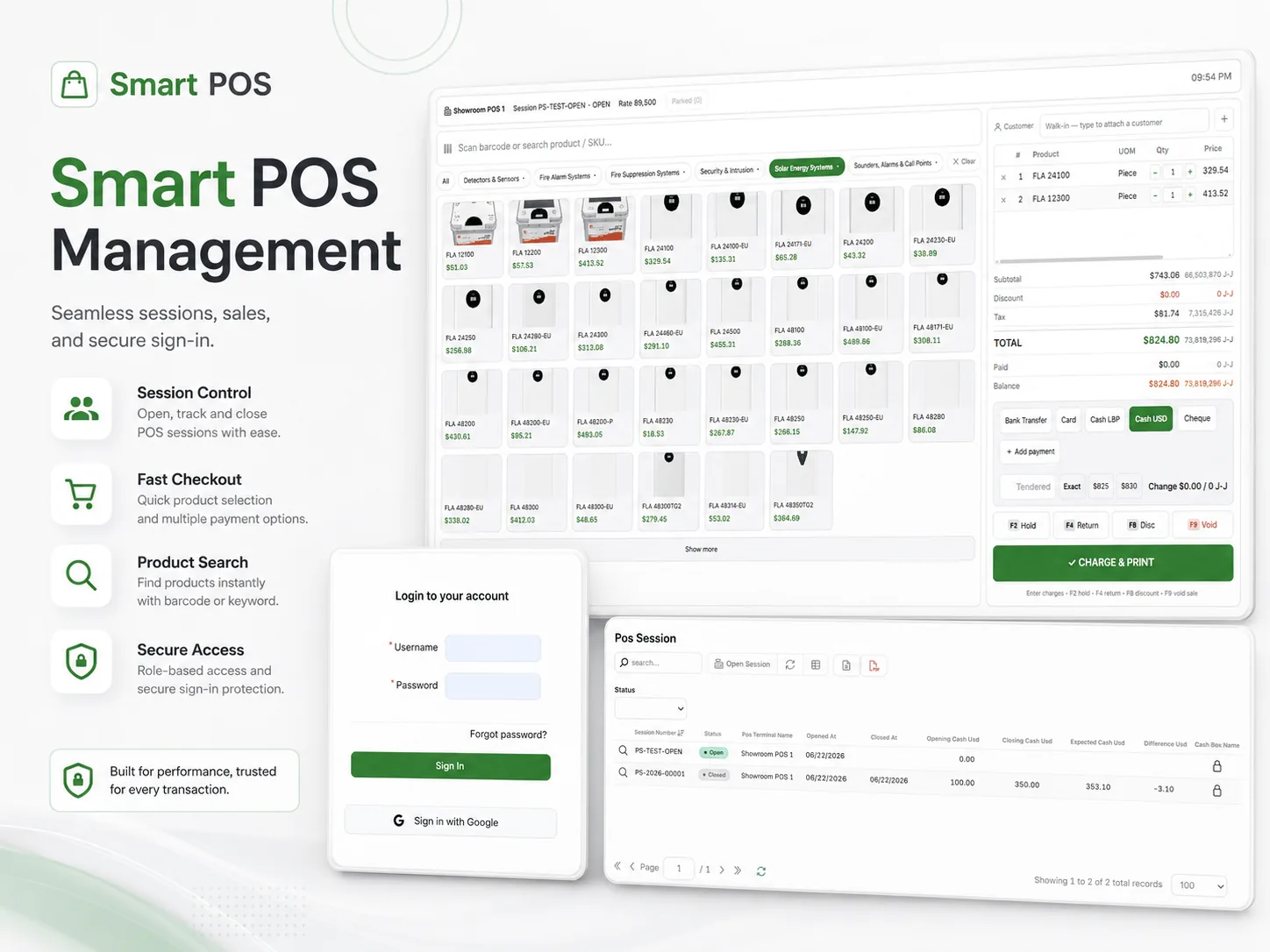
Scan or search, take cash or card, print, next customer. Behind the counter it opens and closes sessions and counts the drawer at the end of the day, so the money on the screen and the money in the box agree.
Off-the-shelf tools work right up to the moment someone on your team starts keeping a spreadsheet beside one, to record the things it cannot handle. That spreadsheet is the signal. It means the tool models a business that is close to yours but not actually yours, and everyone is paying a small daily tax to cover the difference.
Custom software is worth building when that gap is permanent and expensive. We start by watching how the work gets done today, including the workarounds nobody wrote down, and build the system around what is really happening rather than the version in the process document.
A system your team does not have to work around, and does not depend on us to keep.
Shaped like your processIncluding the exceptions. Every business has a customer who is invoiced differently for historical reasons, and that customer is usually why the generic tool failed.
Roles that match the org chartWho can approve, who can see margin, who can void a transaction. Set per role and changeable by you.
Audit trailEvery change kept with a name and a time, so a disputed number has an answer.
Usable away from a deskThe screens someone needs in a van, a warehouse or a meeting work on a phone. The rest is built for the desk it will be used at.
The reports you actually ask forThe numbers your team currently rebuilds by hand each week, available without anyone preparing them, and exportable to Excel.
Documents that come out rightThe forms, PDFs and printouts your work already depends on, in your layout, produced by the system.
Your existing toolsAccounting, stock, payment providers, the systems you are keeping. The value is usually in removing the retyping between them.
The spreadsheet comes in with youThe file the work runs on today is loaded and checked, so nobody starts on an empty system.
Files in and outThe Excel your supplier emails, the CSV your bank produces. The system reads and writes them.
Work that happens on its ownThe overnight import, the Monday report, the reminder nobody should have to remember. Scheduled and monitored.
An API of your ownSo the next system you buy, or an app, can read and write to this one without exporting a file.
Notifications where people already areEmail, or a message, at the moment something needs a decision.
Documented for the next developerWritten to be read by someone who has never met us. That is the difference between owning a system and being tied to whoever wrote it.
The code is yoursThe source, the accounts and the data. You can hand all of it to another team without asking us for anything.
On your server or oursSome work has to stay inside your own building, and that decision is yours to make.
Built with the people who will use itThey see it while it is still being written, so the first version already has their corrections in it.
In your hands earlyThe part that hurts most goes live first, and your team works in it while the rest is still being built.
Someone answersWhen something breaks, you message the people who wrote it. You have their number from the first day.
Scheduled backupsOptionalTaken on a schedule and restored onto a test copy, so you know the restore itself works.
They see their own workOrders, balances, documents and status, without phoning anyone to ask where something is.
They send things inRequests, files and approvals arrive in the system, where they can be tracked and answered.
Each one sees only theirsSeparate logins, and no way for one company to see another's numbers.
It runs on the same dataOne system behind both sides, so nothing has to be copied between them.
Your face on itYour name, your colours, your domain. It reads as part of your company.
The interruptions stopMost of what a portal takes away is people ringing your team for an answer the system already has.
Most of this work sits behind a login, so here are two we can show.
Scan or search, take cash or card, print, next customer. Behind the counter it opens and closes sessions and counts the drawer at the end of the day, so the money on the screen and the money in the box agree.
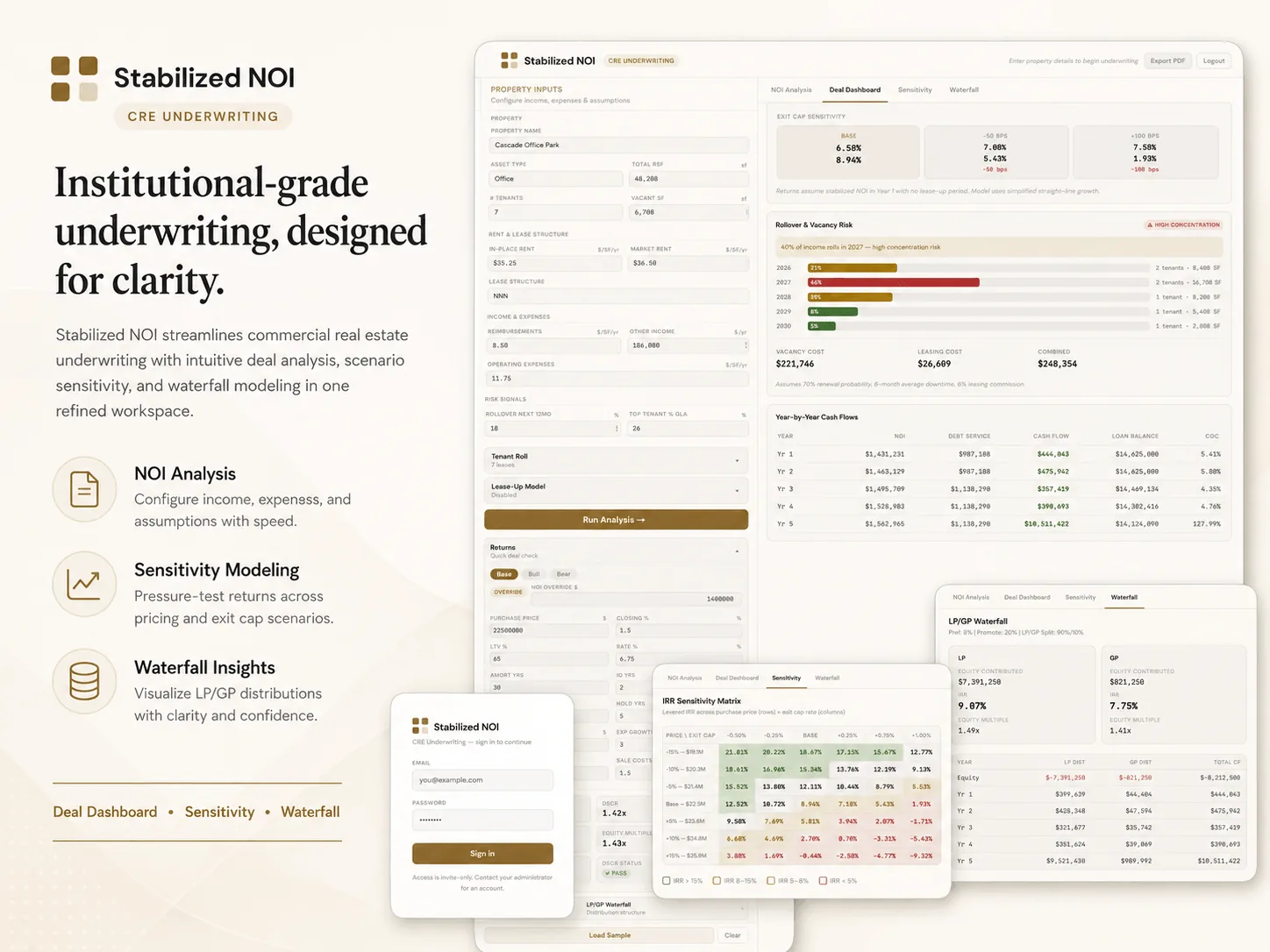
Rents and costs go in, a number the investor can defend comes out. Built for a team whose underwriting had quietly come to depend on one fragile spreadsheet.
Most projects need more than one of these. It is the same team whichever you add, so nothing gets handed between companies on the way.
Custom software
Describe the goal. We will tell you what it takes and what you can skip.
Start a project→