MedVault
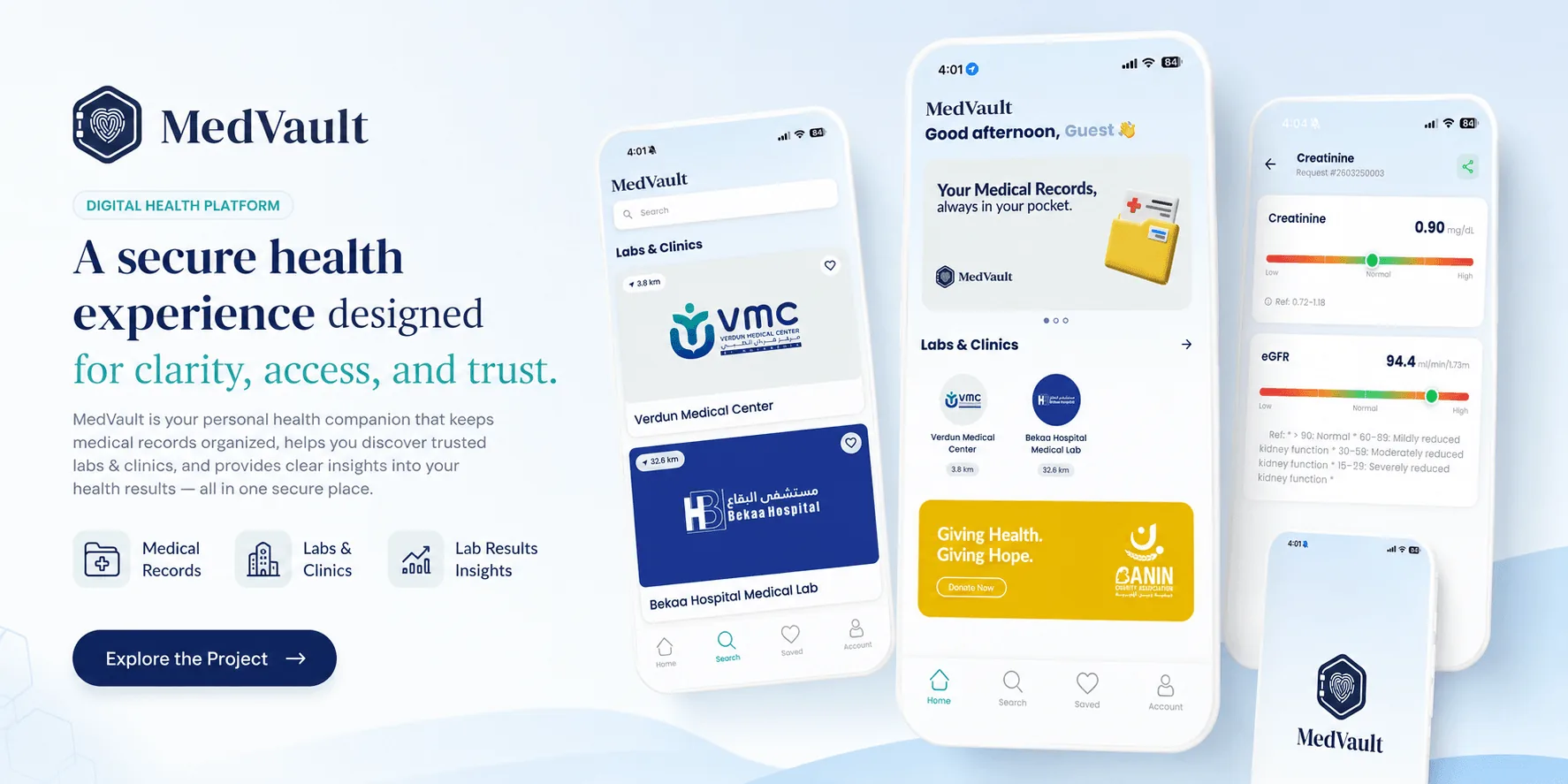
Patient records, appointments and lab results in one app, with the laboratory system behind it and an AI that explains a blood test in plain language. Encrypted, access controlled and audited, because medical data has to be.
Building the screens is the part everyone plans for. The schedule usually goes somewhere else: getting through App Store review, staying compatible with the next iOS release, and handling the user whose phone is three years old, nearly full, and on a connection that drops in a lift.
We have apps live on both stores today. MedVault holds real patient records, which brings a review process and a security bar that most apps never have to clear. Fastr takes rental bookings and payments. CarryOn settles payments between people in different countries. All three still get updates.
Built in before the first release, and looked after once it is out. A few are add-ons, and those are marked.
One app on both storesiPhone and Android released together, from one codebase, so a fix reaches everybody on the same day.
It keeps working offlineThe screens people open most still work with no signal, and what they did syncs by itself once the phone is back.
Push notificationsOptionalSet up on both platforms when the app needs them, including where it asks for permission. Ask at the wrong moment and most people say no once, forever.
Links that open the appA link you send in a message or an email lands on the right screen inside the app, already signed in.
A backend, ours or yoursIf there is no server yet, we build it with the app. If your API already exists, we build against it and connect to it.
Tested on real phonesOld Androids, small screens, a nearly full phone, a connection that drops in a lift, and the permission dialogs a good number of your users will decline.
It follows the phone's settingsDark mode, larger text and reduced motion come from the device. Someone who has set their text big keeps it big in your app.
Sign-in people already haveEmail, a code by SMS, Google, and Apple. Apple's becomes mandatory on iOS the moment you offer any other social login, so it goes in from the start.
Face ID and fingerprintOptionalThe phone's own biometrics unlock the app, with a PIN behind them for the devices and the people that cannot use them.
The shipped app is unreadableAndroid builds go out through R8 and ProGuard: unused code removed, names stripped. Pulling the file apart tells whoever does it very little.
Nothing sensitive left in the openTokens and keys live in the Keychain on iOS and the Keystore on Android, where the phone itself encrypts them.
It only talks to your serverThe app is pinned to your certificate, so on a hostile network it refuses to connect at all.
No secrets inside the appAnything private stays on the server. We assume every file that ships to a phone can be read, and put nothing in it that matters.
Sessions you can endSign-ins expire and renew quietly in the background, and a stolen phone can be signed out from the server.
We do the submittingDeveloper accounts, builds, review, the rejection, and the resubmission that follows it. You never have to open App Store Connect or the Play Console.
Everything in your nameThe two developer accounts, the signing keys and the source code are yours. If you leave, the app and its store listing go with you.
The store page itselfIcon, screenshots, description and the words people really type when they search. For most of your users this page is the whole app until they tap install.
The privacy formsApple's privacy manifest and labels, Google's Data Safety form, answered from what the app actually collects. Getting these wrong is one of the most common reasons a release is held.
You use it before the public doesYour team installs the real build through TestFlight and Play's internal testing, on their own phones, while it can still be changed cheaply.
Crashes come back readableWe watch what breaks after a release. Reports are unscrambled with that exact build's mapping file, so an obfuscated app still points at the line that failed.
Kept inside the deadlinesApple and Google move every year: a newer Android version updates must target, new rules each autumn. We keep the app compliant so it never quietly stops being downloadable.
Someone answersWhen something breaks, you message the people who wrote it. You have their number from the first day.
AnalyticsOptionalWhich screens get used, and where people stop. Wired up before launch when you want it.

Change the app without a releaseText, images, prices and banners come from the admin. The phone picks them up on the next launch, with no store review in between.
Fully dynamic contentListings, categories and menus come out of the database. Adding one does not need a developer.
Send a push yourselfWrite it, choose who gets it, and send it. Either to everyone, or to one group.
Users and permissionsEach person on your side gets exactly the access their job needs, set by role and changeable by you.
Audit logEvery change recorded with a name and a time. You will want this the first time a number is disputed.
Two languagesArabic and English from one admin, with the app's layout flipping where it should.
A switch for old versionsTell an out-of-date app to update before it goes further, or put it in maintenance while something behind it is being fixed.
Most projects arrive with a part of this already done. We take the rest, and we do not ask you to redo what exists.
If the app is designed already, we build it screen for screen from the file: spacing, weights and states read off the frames rather than guessed from a screenshot. That is work we take on often. If there is no design yet, our own designers draw the screens first. Either way you are not left holding half a project.
If your server, database and API already run a website or an internal system, none of it gets rebuilt. We read the endpoints, build the app against them, and come back with the short list of things a phone needs that a browser never did: a token that survives a restart, a smaller response over mobile data, one endpoint for push. If there is no backend, we build that too.
Both of these are published and still getting updates.
Patient records, appointments and lab results in one app, with the laboratory system behind it and an AI that explains a blood test in plain language. Encrypted, access controlled and audited, because medical data has to be.
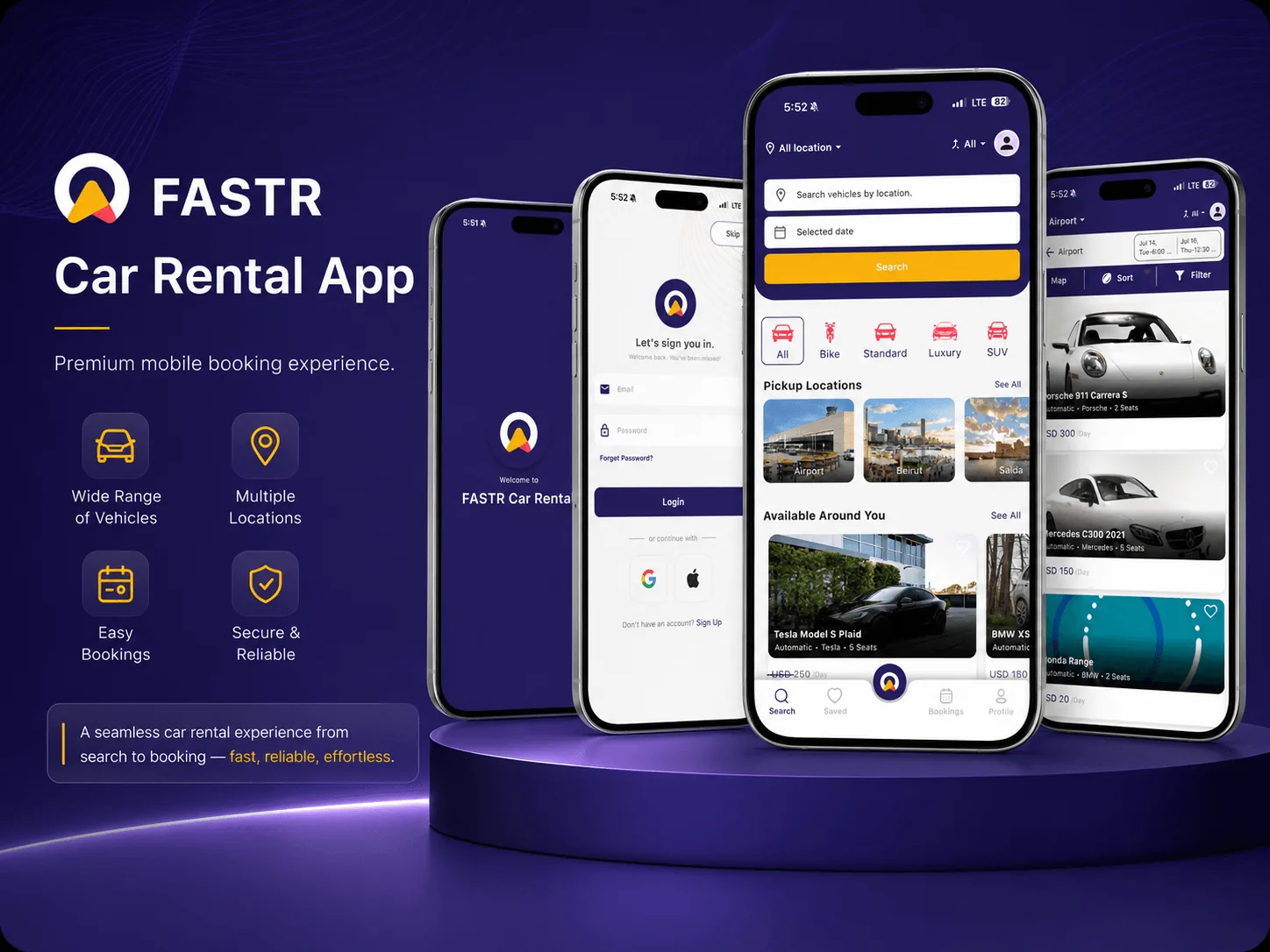
Car rental from searching to holding the keys, on a phone. Availability, booking, payment and the handover, without a phone call in the middle.
Most projects need more than one of these. It is the same team whichever you add, so nothing gets handed between companies on the way.
Mobile apps
Describe the goal. We will tell you what it takes and what you can skip.
Start a project→